
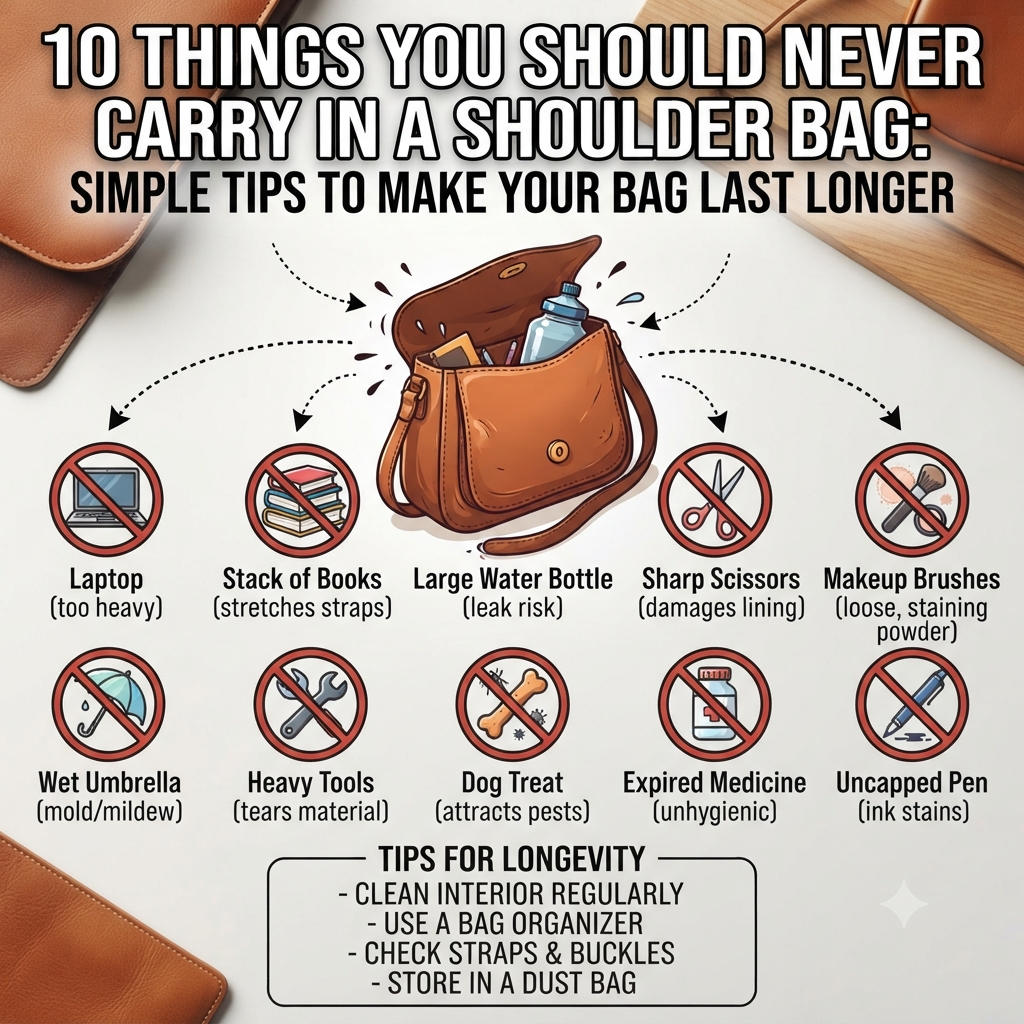
A shoulder bag is more than just a stylish accessory. It carries the essentials you need throughout the day, from your phone and wallet to cosmetics, keys, and personal items. However, what you keep inside your bag can directly affect its appearance, structure, comfort, and lifespan.
Overloading your shoulder bag, storing sharp objects, or carrying items that can leak may cause scratches, stains, stretching, or damage to the lining. The good news is that you can protect your favorite bag simply by being more selective about what you carry.
In this guide, we’ll explore 10 things you should never carry in a shoulder bag and share simple shoulder bag care tips to help your bag stay attractive and functional for longer.
Why Does What You Carry Matter?
Every item inside a shoulder bag adds weight or takes up space. Over time, excessive weight can put pressure on the straps, stitching, zippers, and bottom of the bag.
Some items can also cause direct damage. Sharp objects may scratch the interior, liquids can create stains, and certain cosmetics can leave permanent marks.


A simple rule is:
Carry what you need, protect what you carry, and avoid unnecessary weight.
1. Heavy Books and Unnecessary Items
One of the biggest mistakes people make is treating a shoulder bag like a storage box.
Large books, multiple notebooks, unnecessary gadgets, and other heavy objects can increase the load significantly. Constantly carrying excessive weight can put additional stress on the bag’s shoulder strap, seams, handles, and base.
Better approach
Before leaving home, check whether you actually need everything inside your bag.
For example:
- Carry one notebook instead of several.
- Remove old receipts and papers.
- Leave unused gadgets at home.
- Carry only the books you need that day.
A lighter bag is generally easier to carry and easier on its construction.
2. Sharp Objects Without Protection
Keys, scissors, nail files, pens, and other pointed objects can scratch or puncture the lining of a shoulder bag.
Even something as ordinary as a set of keys can gradually damage a soft interior when it moves around inside the bag.
How to protect your bag
Keep sharp objects inside:
- A small pouch
- A key holder
- A protective case
- A dedicated compartment
This creates a barrier between sharp objects and the bag’s interior.
3. Uncapped Pens and Markers
An uncapped pen may seem like a small problem, but ink stains inside a shoulder bag can be surprisingly difficult to remove.
A pen can accidentally open because of pressure from other items. Once ink reaches the lining, it may spread when the bag moves.
Simple solution
Keep pens in a small stationery pouch rather than placing them loose inside your bag.
Always check that the cap is secure before putting a pen inside.
4. Leaking Water Bottles
Water is essential, but a poorly sealed bottle can cause unnecessary damage.
A leaking bottle can wet the lining, stain fabric, damage paper items, and create unpleasant odors. With some materials, prolonged moisture exposure can also affect the bag’s finish.
Better way to carry water
Use a properly sealed bottle and keep it upright whenever possible.
If your bag has a dedicated bottle compartment, use it. Otherwise, consider placing the bottle inside a protective sleeve or waterproof pouch.
5. Loose Cosmetics and Makeup Products
Lipsticks, foundation, liquid concealer, perfume, and other cosmetics can leak or spill inside your bag.
Once makeup gets into fabric or other absorbent materials, cleaning it may be difficult.


Keep cosmetics organized
Instead of carrying makeup products loose, place them in a dedicated cosmetic pouch.
This has two benefits:
- It keeps your bag organized.
- It creates an extra layer of protection against spills.
6. Food Without Proper Packaging
Snacks can be convenient when you’re travelling or working, but loose food should never be placed directly inside your shoulder bag.
Crumbs can collect in corners and seams, while oily or wet food can stain the lining. Strong-smelling food may also leave an unpleasant odor.
The solution
Use:
- Airtight containers
- Reusable food pouches
- Properly sealed snack packets
Never put open food directly into your bag.
7. Wet Items
Wet umbrellas, damp clothes, gym towels, and other wet items can introduce moisture into your bag.
Moisture may lead to unpleasant odors and can be particularly problematic for materials that don’t dry easily.
What to do instead
Use a waterproof pouch or separate compartment for damp items.
If possible, allow wet belongings to dry before storing them in your shoulder bag for an extended period.
8. Too Many Coins
A few coins are perfectly fine, but carrying a large collection of coins can add unnecessary weight.
Loose coins can also move around inside the bag and scratch delicate surfaces or create noise.
Better solution
Use a compact coin purse and remove old or unnecessary coins regularly.
This keeps your shoulder bag lighter and makes finding your essentials easier.
9. Oversized Items That Stretch the Bag
Trying to force large objects into a small shoulder bag can distort its original shape.
Items such as oversized notebooks, bulky chargers, large cosmetic cases, or thick wallets may stretch the opening or put pressure on the zipper.
Choose the right size
If an item doesn’t fit naturally, don’t force it.
A bag should have enough room for your essentials without being stretched beyond its intended capacity.
10. Too Many Unnecessary Essentials
The final item on the list is actually everything you don’t need.
Receipts, old packaging, expired cards, unused cables, empty containers, and miscellaneous items can accumulate surprisingly quickly.
The result is an unnecessarily heavy and cluttered shoulder bag.
Try a weekly bag clean-out
Once a week:
- Empty the entire bag.
- Remove rubbish and receipts.
- Check every item.
- Keep only what you regularly use.
- Organize everything into appropriate compartments or pouches.
A few minutes of organization can make your bag lighter and easier to use.
Items to Avoid Carrying: Quick Guide
| Item | Potential Problem | Better Alternative |
|---|---|---|
| Heavy books | Adds excessive weight | Carry only necessary books |
| Sharp objects | Can scratch or puncture lining | Use a protective case |
| Uncapped pens | May cause ink stains | Use a stationery pouch |
| Leaking bottles | Can cause moisture damage | Use a sealed bottle |
| Loose cosmetics | May leak or stain | Use a makeup pouch |
| Unpacked food | Can cause stains and odors | Use sealed containers |
| Wet items | Can create moisture and odors | Use a waterproof pouch |
| Excess coins | Adds unnecessary weight | Use a coin purse |
| Oversized items | Can stretch the bag | Use an appropriately sized bag |
| Unnecessary belongings | Creates weight and clutter | Clean out the bag regularly |
How Overloading Can Affect Your Shoulder Bag
The weight of your belongings doesn’t just affect comfort. It can also place additional stress on different parts of the bag.
Shoulder Strap
A heavy load puts more tension on the strap and the points where it connects to the bag.
Stitching
Repeated stress can affect stitching, particularly around handles and strap attachment points.
Shape
An overloaded bag may lose its original shape and become stretched or misshapen.
Zippers
Overfilling can put pressure on zippers and make them harder to close smoothly.
Bottom of the Bag
A heavy load can cause the base of the bag to sag over time.
For these reasons, capacity isn’t just about how much you can fit inside—it is also about how much the bag is designed to carry comfortably.
Simple Habits That Can Make Your Shoulder Bag Last Longer
Avoiding damaging items is only one part of good shoulder bag care. A few regular habits can further protect your bag.
Clean Out Your Bag Regularly
Don’t wait until your bag becomes completely cluttered. A weekly clean-out can prevent unnecessary weight from accumulating.
Use Small Pouches
Separate cosmetics, electronics, stationery, and personal items into individual pouches. This makes organization easier and protects the interior.
Avoid Overfilling
If the zipper is difficult to close or the bag looks stretched, you may be carrying too much.
Store Your Bag Properly
When you’re not using your shoulder bag, keep it in a clean, dry place. Avoid crushing it under other belongings.
Pay Attention to the Material
Different materials require different care. Leather, faux leather, canvas, nylon, and fabric bags may have different cleaning and storage requirements.
Rotate Your Bags
If you own multiple shoulder bags, rotating them can give each bag a break from everyday wear.
What Should You Carry in a Shoulder Bag?
Avoiding unnecessary items doesn’t mean you need to leave without your essentials.
A practical everyday shoulder bag might include:
- Phone
- Wallet
- Keys
- Small cosmetic pouch
- Tissues
- Hand sanitizer
- Sunglasses
- Small notebook or pen
- Personal essentials
The exact contents depend on your lifestyle and the size of your bag.
The goal is simple: carry useful essentials without unnecessarily filling every available space.
Final Thoughts
A shoulder bag can remain stylish and functional for years when it is used and cared for properly. One of the easiest ways to extend its lifespan is to pay attention to what you put inside it.
Avoid excessive weight, sharp objects, leaking liquids, loose cosmetics, wet belongings, and oversized items. Regularly cleaning out unnecessary belongings can also reduce strain on the bag and make everyday organization easier.
Remember, a long-lasting shoulder bag isn’t just about choosing a durable material—it is also about how you use it every day. Carry smart, organize your essentials, and give your favorite shoulder bag the care it deserves.