
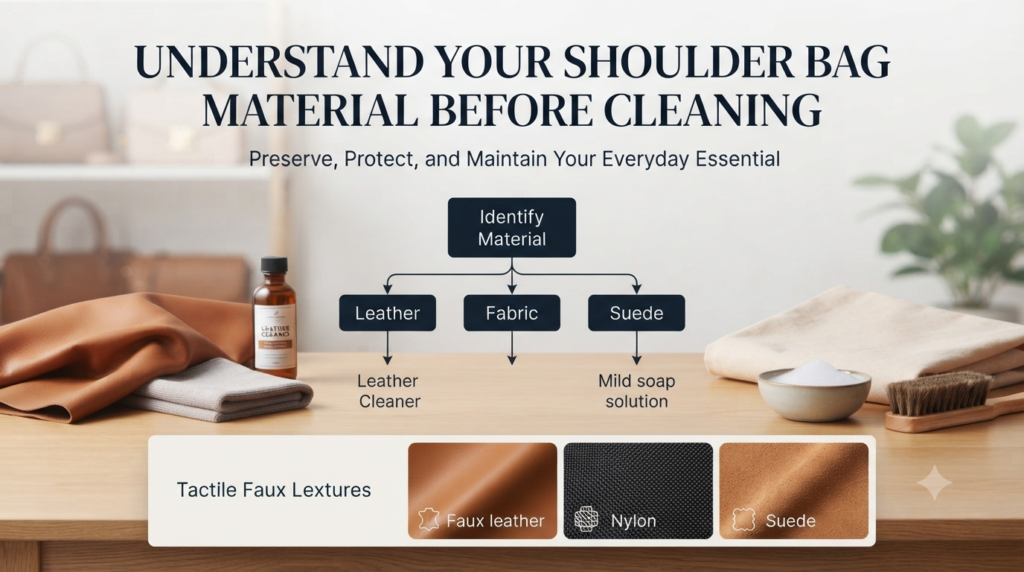
Cleaning a shoulder bag starts with identifying the material it is made from. Every material reacts differently to water, cleaning solutions, and scrubbing. Using the wrong cleaning method can cause permanent damage such as fading, cracking, peeling, shrinking, or discoloration. Before applying any cleaner, always check the care label or the manufacturer’s instructions if available.
Understanding your bag’s material helps you choose the safest cleaning products and techniques. While some materials can handle mild soap and water, others require specialized cleaners or dry cleaning. Taking a few minutes to identify the material can significantly extend the life of your shoulder bag and preserve its original appearance.
Why Material Identification Is Important
Different shoulder bag materials have unique characteristics that affect how they should be cleaned. For example, genuine leather requires conditioning after cleaning to prevent drying, while canvas bags often tolerate gentle hand washing. Suede, on the other hand, is highly sensitive to moisture and should only be cleaned with specialized tools.
Choosing the correct cleaning method helps:
- Prevent permanent stains and discoloration
- Protect the bag’s texture and finish
- Maintain softness and flexibility
- Preserve stitching and adhesives
- Extend the bag’s overall lifespan
Always identify your shoulder bag material before beginning the cleaning process.
Common Shoulder Bag Materials and Their Cleaning Methods
| Material | Characteristics | Recommended Cleaning Method | Avoid |
| Genuine Leather | Durable, premium, natural texture | Wipe with a damp microfiber cloth and use a leather cleaner followed by conditioner | Excess water, alcohol, bleach, harsh detergents |
| Faux Leather (PU Leather) | Affordable, water-resistant, smooth finish | Clean with mild soap and a soft damp cloth | Abrasive scrubbers and strong chemicals |
| Canvas | Strong, breathable fabric | Spot clean with mild detergent and soft brush | Hot water and machine washing unless specified |
| Nylon | Lightweight and durable | Wipe with warm water and mild soap | High heat drying |
| Polyester | Water-resistant and easy to maintain | Hand clean with gentle detergent | Bleach and harsh solvents |
| Suede | Soft, velvety texture | Use a suede brush and suede cleaner | Water soaking and liquid detergents |
Quick Material Identification Guide
| If Your Bag Feels… | It Is Likely Made Of… |
| Soft with natural grain | Genuine Leather |
| Smooth and uniform | Faux Leather |
| Thick woven fabric | Canvas |
| Lightweight synthetic fabric | Nylon |
| Slightly shiny synthetic fabric | Polyester |
| Soft and fuzzy surface | Suede |
Simple Flow Diagram: Choosing the Right Cleaning Method
Identify Bag Material
│
┌──────────────────┼──────────────────┐
│ │ │
Leather Fabric Materials Suede
│ │ │
Leather Cleaner Mild Soap Solution Suede Brush
│ │ │
└──────────────────┼──────────────────┘
│
Safe & Effective Cleaning
Best Practices Before Cleaning
Before you begin cleaning your shoulder bag, follow these preparation steps:
- Empty all pockets and compartments.
- Shake out loose dust and debris.
- Remove detachable straps or accessories if possible.
- Test any cleaning product on a hidden area first.
- Use clean, soft microfiber cloths to avoid scratching the material.
- Never soak the entire bag unless the manufacturer specifically recommends it.
<u>Testing a cleaning solution on a small, hidden area helps prevent unexpected discoloration or material damage.</u>
Conclusion
Understanding your shoulder bag’s material is the foundation of safe and effective cleaning. Each material requires specific care to maintain its appearance, strength, and durability. By selecting the right cleaning method from the start, you can avoid costly damage and keep your bag looking its best