
Introduction
A health-friendly shoulder bag is not just about style or storage capacity—it is about comfort, balance, and long-term physical well-being. The right bag is designed with ergonomic features that help reduce strain on the shoulders, neck, and back, making everyday carrying easier and safer for your body. When these features are properly considered, a shoulder bag becomes a supportive accessory rather than a source of discomfort.
A health-friendly shoulder bag is designed to reduce physical strain while providing practical storage and everyday convenience. The right combination of materials, structure, and ergonomic features can significantly improve carrying comfort and help protect your shoulders, neck, and back from unnecessary stress.
When shopping for a shoulder bag, it is important to look beyond appearance and focus on features that support your overall well-being. A thoughtfully designed bag can make a noticeable difference in how comfortable you feel throughout the day.
Wide and Padded Shoulder Straps
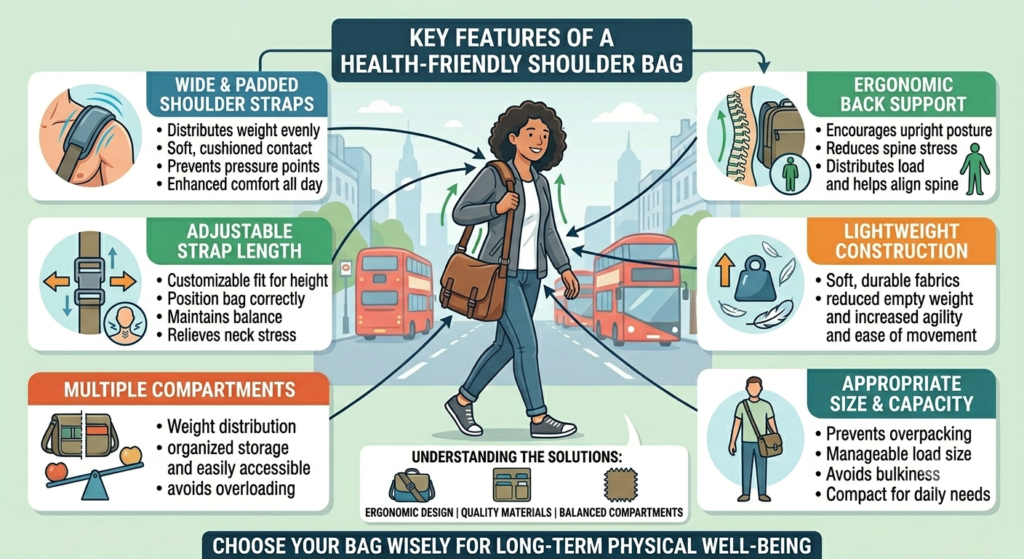
One of the most important features of a health-friendly shoulder bag is a wide, padded strap. Wider straps distribute weight across a larger surface area, reducing pressure on the shoulder. Padding adds an extra layer of comfort and helps prevent the strap from digging into the skin during extended use.
Lightweight Construction
The bag itself should be lightweight before any items are placed inside. Heavy materials add unnecessary weight and increase the burden on your body. Lightweight fabrics and soft yet durable materials make carrying daily essentials more comfortable.
Adjustable Strap Length
An adjustable strap allows users to customize the fit according to their height and body type. Proper strap adjustment helps position the bag correctly against the body, improving balance and reducing strain on the shoulders and back.
Multiple Compartments for Better Organization
A well-organized shoulder bag helps distribute weight more evenly. Multiple compartments prevent items from gathering in one area, reducing imbalance and making it easier to access belongings without unnecessary movement.
Appropriate Size and Capacity
A health-friendly shoulder bag should match your daily needs. An oversized bag may encourage carrying unnecessary items, increasing overall weight. Choosing a size that comfortably holds essentials helps maintain a manageable load.
Durable and Supportive Structure
A sturdy bag maintains its shape and provides better support for the items inside. Reinforced stitching, quality materials, and a balanced design contribute to greater comfort and long-term durability.
By prioritizing these features, you can select a shoulder bag that combines style, functionality, and ergonomic support. Investing in a health-friendly design helps reduce physical strain and promotes a more comfortable carrying experience every day.
Conclusion
Choosing a health-friendly shoulder bag is an important step toward protecting your posture and preventing unnecessary physical strain. Each feature—whether it is padded straps, lightweight construction, or proper organization—plays a key role in improving comfort and reducing pressure on the body.
By focusing on functionality along with design, you can ensure that your shoulder bag supports your daily activities without compromising your health. A well-structured, ergonomic bag not only enhances convenience but also promotes long-term comfort and better physical well-being.