
Introduction
Comfort and ergonomics play a crucial role when choosing a shoulder bag for work. Many professionals carry their bags throughout the day while commuting, attending meetings, traveling, or moving between workplaces. A shoulder bag that lacks proper support can cause discomfort and negatively impact daily productivity.
Poorly designed bags often place excessive strain on the shoulders, neck, and back. Over time, uneven weight distribution and inadequate support can lead to fatigue and posture-related issues. Choosing a shoulder bag with ergonomic features helps improve comfort and makes carrying daily essentials easier and more manageable.
Why Comfort Matters in a Work Shoulder Bag
A shoulder bag should do more than carry belongings—it should support your daily routine without causing physical strain. Professionals often carry laptops, documents, chargers, notebooks, and personal items, which can add significant weight throughout the day.
When a bag is designed with comfort in mind, it helps reduce pressure on the body and allows for easier movement. This becomes especially important for individuals who spend long hours commuting or frequently travel for work.
Common Issues Caused by Uncomfortable Bags
Some shoulder bags may look attractive but fail to provide adequate support. Common problems associated with poorly designed bags include:
- Shoulder discomfort
- Neck strain
- Back fatigue
- Uneven posture
- Reduced carrying comfort
- Increased physical stress during long commutes
Selecting a bag with ergonomic features can help minimize these issues and improve the overall carrying experience.
Adjustable Shoulder Straps Improve Fit and Flexibility
Adjustable straps are one of the most important comfort features in a shoulder bag. They allow users to customize the carrying position according to their height, body shape, and personal preference.
A properly adjusted strap helps keep the bag close to the body, improving stability and reducing unnecessary movement while walking. This feature also allows users to adapt the fit based on clothing layers, making the bag comfortable throughout different seasons.
Benefits of Adjustable Straps
- Personalized carrying position
- Improved weight distribution
- Better stability while walking
- Reduced shoulder strain
- Greater flexibility for everyday use
The Importance of Padded Shoulder Support
Shoulder straps can create pressure points when carrying heavy items for extended periods. Padded shoulder support helps reduce this pressure by providing cushioning between the strap and the shoulder.
Professionals who regularly carry laptops, files, or electronic accessories often benefit from additional padding. This feature improves comfort during long workdays and helps prevent discomfort caused by narrow or rigid straps.
Advantages of Padded Support
- Increased carrying comfort
- Reduced shoulder pressure
- Better support for heavier loads
- Improved long-term usability
Lightweight Materials Enhance Everyday Comfort
The weight of a shoulder bag starts with the material used in its construction. Heavy materials can make a bag feel cumbersome even before adding work essentials.
Modern shoulder bags often use lightweight materials that provide durability without adding unnecessary bulk. Selecting a lightweight bag helps reduce overall carrying weight and improves comfort throughout the day.
Common Lightweight Materials
| Material | Key Benefits |
| Nylon | Lightweight, durable, and water-resistant |
| Canvas | Flexible and comfortable for daily use |
| Polyester | Practical and easy to maintain |
| Vegan Leather | Stylish with reduced weight |
| Soft Leather | Professional appearance with enhanced comfort |
Balanced Weight Distribution Reduces Strain
Weight distribution significantly affects how comfortable a shoulder bag feels during use. A well-designed bag spreads weight evenly, preventing excessive pressure from concentrating on one area of the body.
Organized compartments and balanced construction help maintain stability while walking or commuting. This design approach reduces strain on the shoulder and improves overall comfort during extended periods of use.
Features That Support Better Weight Distribution
- Structured compartments
- Reinforced strap attachments
- Stable bag construction
- Evenly spaced storage sections
- Balanced overall design
Soft Interior Lining Adds Protection and Convenience
Although interior lining primarily protects belongings, it also contributes to the overall quality and usability of a shoulder bag. Soft linings help safeguard laptops, tablets, phones, and other valuables from scratches and minor impacts.
A quality interior creates a better user experience by making organization easier and enhancing the durability of the bag over time.
Benefits of Soft Interior Linings
- Protects electronic devices
- Prevents scratches and scuffs
- Improves durability
- Creates a premium feel
- Enhances organization
Why Ergonomic Design Matters
Ergonomic design focuses on creating products that work naturally with the body. In shoulder bags, ergonomic features help minimize physical stress while improving comfort and functionality.
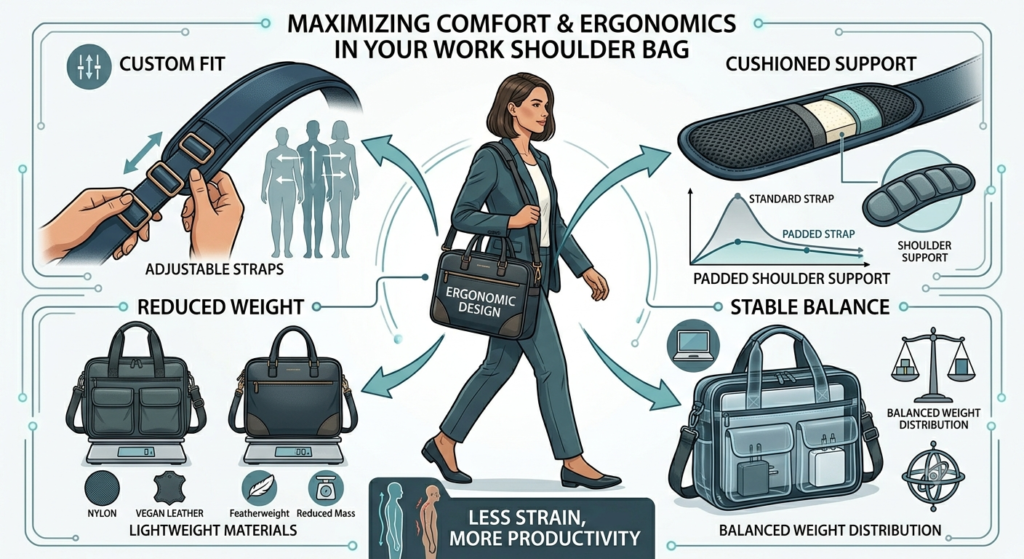
An ergonomically designed shoulder bag combines thoughtful weight distribution, supportive straps, lightweight construction, and practical organization. These features work together to create a carrying experience that feels comfortable throughout the workday.
Key Comfort Features to Look For
| Feature | Benefit |
| Adjustable shoulder straps | Allows a customized fit |
| Padded shoulder support | Reduces pressure on shoulders |
| Lightweight construction | Makes carrying easier |
| Balanced weight distribution | Improves overall comfort |
| Soft interior lining | Protects belongings |
| Ergonomic design | Supports natural body movement |
Tips for Maintaining Comfort Throughout the Day
Even the most ergonomic shoulder bag performs best when used correctly. Proper packing and organization can significantly improve comfort and reduce unnecessary strain.
Consider the following practices:
- Carry only essential items.
- Place heavier items near the center of the bag.
- Organize belongings evenly across compartments.
- Adjust the shoulder strap regularly.
- Avoid overloading the bag.
- Clean out unused items periodically.
These habits help maximize the benefits of an ergonomic shoulder bag and support long-term comfort.
Conclusion
Prioritizing comfort and ergonomics is essential when selecting a shoulder bag for work. Features such as adjustable straps, padded shoulder support, lightweight materials, balanced weight distribution, and ergonomic construction can make a significant difference in daily comfort. These elements help reduce strain, improve posture, and create a more enjoyable carrying experience.
By focusing on ergonomic design rather than appearance alone, professionals can choose a shoulder bag that supports both their productivity and well-being. A comfortable shoulder bag not only carries essentials efficiently but also contributes to a healthier and more practical work routine.