
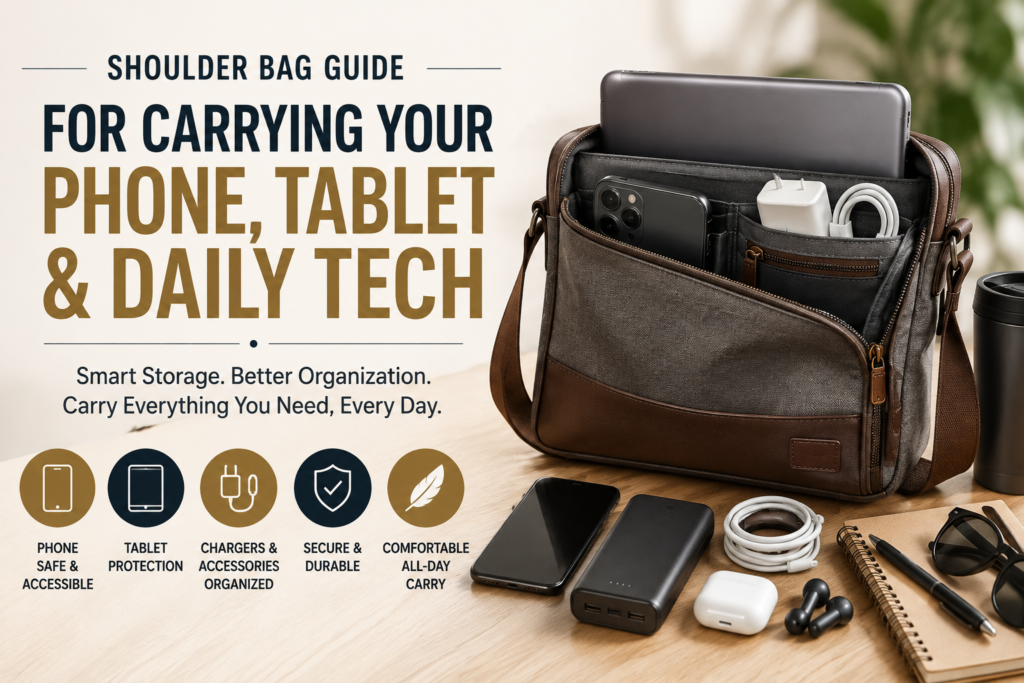
Today, a shoulder bag carries much more than a wallet and keys. For many people, daily essentials now include a smartphone, tablet, charger, power bank, earphones, cables, and other small electronic accessories.
Whether you are going to work, college, a café, travelling, or simply running errands, choosing the right shoulder bag for your daily tech can help keep your belongings safe, organized, accessible, and comfortable to carry.
However, not every shoulder bag is designed for electronics. A bag may look stylish on the outside but lack enough protection, compartments, or space for the technology you carry every day.
This guide will help you understand how to choose the right shoulder bag for carrying your phone, tablet, chargers, accessories, and other daily tech essentials.
Why Your Shoulder Bag Needs to Be Tech-Friendly
Technology has become an important part of everyday life. Most people carry at least one electronic device when leaving home.
Your daily bag may need to accommodate:
- Smartphone
- Tablet or iPad
- Charger
- Charging cable
- Power bank
- Wireless earphones
- Headphones
- Smartwatch charger
- USB drives
- Small camera
- Portable Wi-Fi device
- Notebook and pen
When all these items are placed loosely inside a single compartment, they can become difficult to find. Cables may become tangled, devices may scratch against keys, and smaller accessories can easily disappear inside the bag.
A well-organized shoulder bag makes everyday carrying much easier.
1. Choose the Right Bag Size
The first thing to consider is the size of your shoulder bag.
A bag should have enough room for your technology without becoming unnecessarily large or heavy.
Small Shoulder Bags
A small shoulder bag may be suitable if you usually carry:
- Smartphone
- Earphones
- Power bank
- Small charger
- Wallet
- Keys
This option is ideal for short outings, shopping, casual meetings, or situations where you want to travel light.
However, a small bag may not have enough space for a tablet or larger accessories.
Medium-Sized Shoulder Bags
For most people, a medium-sized shoulder bag offers the best balance.
It can usually accommodate:
- Phone
- Tablet
- Charger
- Power bank
- Earphones
- Wallet
- Keys
- Notebook
- Small accessories
A medium bag provides useful storage while remaining comfortable for everyday use.
Large Shoulder Bags
A larger shoulder bag may be useful if you regularly carry:
- Large tablet
- Multiple devices
- Headphones
- Documents
- Notebook
- Chargers and cables
- Water bottle
- Personal essentials
Before choosing a large bag, remember that more space can encourage you to carry unnecessary items.
Best choice: Select a bag based on what you actually carry every day.
2. Make Sure Your Tablet Fits Properly
If you carry a tablet, checking the bag dimensions is extremely important.
Do not assume that a bag will fit your tablet simply because it appears large enough.
Check:
- Tablet height
- Tablet width
- Bag compartment dimensions
- Opening width
- Interior depth
A tablet should fit comfortably without forcing the zipper or stretching the bag.
Ideally, the bag should provide a dedicated compartment or sleeve for the device.
Why a Dedicated Tablet Compartment Matters
A separate compartment helps prevent your tablet from coming into contact with:
- Keys
- Metal accessories
- Chargers
- Pens
- Hard objects
This can reduce the risk of scratches and keep your bag more organized.
3. Protect Your Phone from Scratches and Pressure
Your smartphone is probably one of the most frequently used items in your bag.
A good shoulder bag should make your phone easy to access while also keeping it protected.
Look for a Phone Pocket
A dedicated phone pocket can help you quickly find your device.
Useful options include:
- Interior phone pockets
- Zippered pockets
- Padded compartments
- Easy-access sections
Avoid placing your phone loosely next to keys, coins, or sharp accessories.
A separate pocket can help protect the screen and body of your phone from unnecessary scratches.
4. Look for Multiple Compartments
Organization is one of the most important features of a shoulder bag designed for daily technology.
Instead of one large empty compartment, look for a bag with separate sections.
A Practical Layout Could Include:
Main compartment
For larger items such as a tablet, notebook, or pouch.
Tablet sleeve
For keeping your tablet separated from other belongings.
Phone pocket
For quick and easy access.
Zippered inner pocket
For valuables and smaller accessories.
Accessory pocket
For chargers, power banks, and earphones.
Outer pocket
For frequently used items.
The more thoughtfully organized your bag is, the less time you will spend searching for your belongings.
5. Keep Chargers and Cables Organized
Chargers and cables can quickly create clutter inside a bag.
A charging cable tangled around earphones or other accessories can be frustrating when you need something quickly.
One of the easiest solutions is to use a small tech organizer pouch.
You can store:
- Charging cables
- USB cables
- Power bank
- Charging adapters
- Earphones
- USB drives
A pouch also makes it easier to transfer your technology essentials between different bags.
Tip
Avoid placing loose cables directly beside delicate devices whenever possible. Keeping accessories together in one pouch creates a cleaner and more organized bag interior.
6. Consider Padding for Extra Protection
If you regularly carry a tablet or other electronics, padding can be an important feature.
A padded compartment provides additional protection from:
- Everyday bumps
- Pressure from other belongings
- Minor impacts
- Hard accessories
You do not necessarily need an extremely bulky bag. Even a lightly padded sleeve can provide useful protection for daily commuting and travel.
For people carrying expensive devices, additional protection may be worth considering.
7. Choose a Secure Closure
Technology can be valuable, so bag security should not be overlooked.
A secure closure helps keep your belongings inside the bag while you are walking, travelling, or commuting.
Common Closure Options
Zipper
One of the most practical options for everyday security.
Magnetic snap
Quick and convenient but may provide less protection than a zipper.
Flap closure
Provides additional coverage and can create a stylish appearance.
Buckle closure
Can offer a secure and classic design.
For crowded places and daily commuting, a shoulder bag with a secure zippered main compartment can be a practical choice.
8. Check the Shoulder Strap for Comfort
Technology can add significant weight to your bag.
A tablet, power bank, charger, and other accessories may not seem heavy individually, but together they can make a bag uncomfortable.
Look for a shoulder strap with:
- Adjustable length
- Comfortable width
- Strong stitching
- Secure attachment points
- Smooth edges
- Durable material
An adjustable strap allows you to position the bag comfortably depending on your height and clothing.
If you carry your bag for several hours, comfort should be a major priority.
9. Do Not Overload Your Shoulder Bag
One common mistake is using every available space inside the bag.
Even a well-designed shoulder bag can become uncomfortable when overloaded.
Carrying too much weight may:
- Make the strap uncomfortable
- Affect your posture
- Make items harder to find
- Put pressure on electronic devices
- Make the bag difficult to carry
Try to carry only the technology and accessories you actually need for the day.
For example, you may not need:
- Multiple charging cables
- Several power banks
- Unused accessories
- Extra devices
A lighter and better-organized bag is often more practical than an oversized bag filled with unnecessary items.
10. Choose a Durable Material
Your daily shoulder bag needs to handle frequent use.
It may be placed on desks, chairs, car seats, public transport, and other surfaces throughout the day.
Popular materials include:
Leather
Leather can provide a premium and professional appearance. It is suitable for office use and formal settings.
Faux Leather
Faux leather can offer a stylish appearance and is often easier to maintain.
Canvas
Canvas bags are usually casual and lightweight, making them suitable for college and everyday outings.
Nylon
Nylon is lightweight and practical, making it useful for commuting and travel.
Polyester
Polyester can provide durability and affordability for regular use.
Regardless of the material, check the overall construction, including:
- Stitching
- Zippers
- Strap attachments
- Interior lining
- Hardware
11. Keep Tech and Personal Items Separate
Your shoulder bag may also contain personal items such as:
- Wallet
- Keys
- Makeup
- Sunglasses
- Water bottle
- Personal-care products
It is important to consider where these items will be placed.
For example, keys should not be placed directly beside a tablet or phone.
Similarly, bottles containing liquids should be positioned carefully to reduce the risk of accidental spills near electronics.
Using separate compartments can help keep your devices and personal belongings organized.
12. Consider Quick Access to Important Devices
Convenience is another important factor.
Your phone is something you may need to access multiple times throughout the day.
A bag with a well-positioned phone pocket can save time and reduce the need to search through everything inside your bag.
However, easy access should also be balanced with security.
A good design provides convenient access without leaving valuable devices unnecessarily exposed.
Best Shoulder Bag Features for Daily Tech
When choosing a shoulder bag for carrying technology, look for these important features:
| Requirement | Ideal Feature |
|---|---|
| Smartphone | Dedicated phone pocket |
| Tablet | Separate tablet sleeve |
| Chargers | Accessory compartment |
| Cables | Small organizer pouch or pocket |
| Power bank | Secure inner compartment |
| Daily commuting | Zippered main closure |
| Long carrying hours | Adjustable comfortable strap |
| Device protection | Padded interior section |
| Easy organization | Multiple compartments |
| Everyday use | Lightweight and durable material |
Shoulder Bag Essentials for Different Lifestyles
For Office Professionals
Consider a structured shoulder bag with space for:
- Smartphone
- Tablet
- Charger
- Documents
- Notebook
- Wallet
- Professional accessories
A clean and organized interior can make it easier to move between meetings and workspaces.
For College Students
Students may need additional storage for:
- Phone
- Tablet
- Charger
- Earphones
- Notebook
- Stationery
- Power bank
A lightweight bag with multiple compartments can help keep everything organized.
For Daily Commuters
Commuters should prioritize:
- Secure closure
- Comfortable strap
- Durable material
- Easy-access pockets
- Organized storage
A bag that is comfortable to carry on public transport can make daily travel easier.
For Travel
When travelling, technology organization becomes even more important.
Consider a bag with secure storage for:
- Phone
- Tablet
- Passport
- Charger
- Power bank
- Earphones
- Travel documents
A combination of secure compartments and easy access can be especially useful during travel.
Common Mistakes to Avoid
Choosing a Bag Based Only on Appearance
A stylish bag may not provide enough protection or organization for your daily technology.
Ignoring Bag Dimensions
Always check whether your tablet or other devices will fit properly.
Carrying Devices Loose with Keys
Keys and hard accessories can potentially scratch your devices.
Overloading the Bag
A bag filled with unnecessary accessories can become heavy and uncomfortable.
Ignoring Strap Comfort
A narrow or uncomfortable strap can make carrying technology unpleasant.
Choosing Too Few Compartments
Without proper organization, smaller accessories can quickly become difficult to find.
Forgetting About Security
A bag without a secure closure may not be ideal for crowded or busy environments.
How to Choose the Right Shoulder Bag for Your Daily Tech
Before buying a shoulder bag, ask yourself:
- What technology do I carry every day?
- Do I carry a phone, tablet, or both?
- What are the dimensions of my largest device?
- Do I need a padded compartment?
- How many chargers and cables do I carry?
- Do I need multiple pockets?
- Will I carry the bag for several hours?
- Is the shoulder strap comfortable and adjustable?
- Does the bag have a secure closure?
- Can the bag also hold my personal essentials?
Answering these questions can help you choose a bag that fits your real daily routine rather than simply choosing one based on appearance.
Final Thoughts
The best shoulder bag for carrying your phone, tablet, and daily technology should offer a balance of storage, organization, comfort, protection, and style.
You do not always need the biggest bag. A well-designed medium-sized shoulder bag with useful compartments can often be more practical than a large bag with one empty interior space.
Focus on features such as a secure closure, dedicated device storage, comfortable straps, durable materials, and organized compartments.
The right shoulder bag can make it easier to carry your technology safely while keeping everything you need within easy reach.
Choose a bag that fits your devices, protects your essentials, keeps your accessories organized, and remains comfortable throughout your day. That is the ideal shoulder bag for modern daily life.