
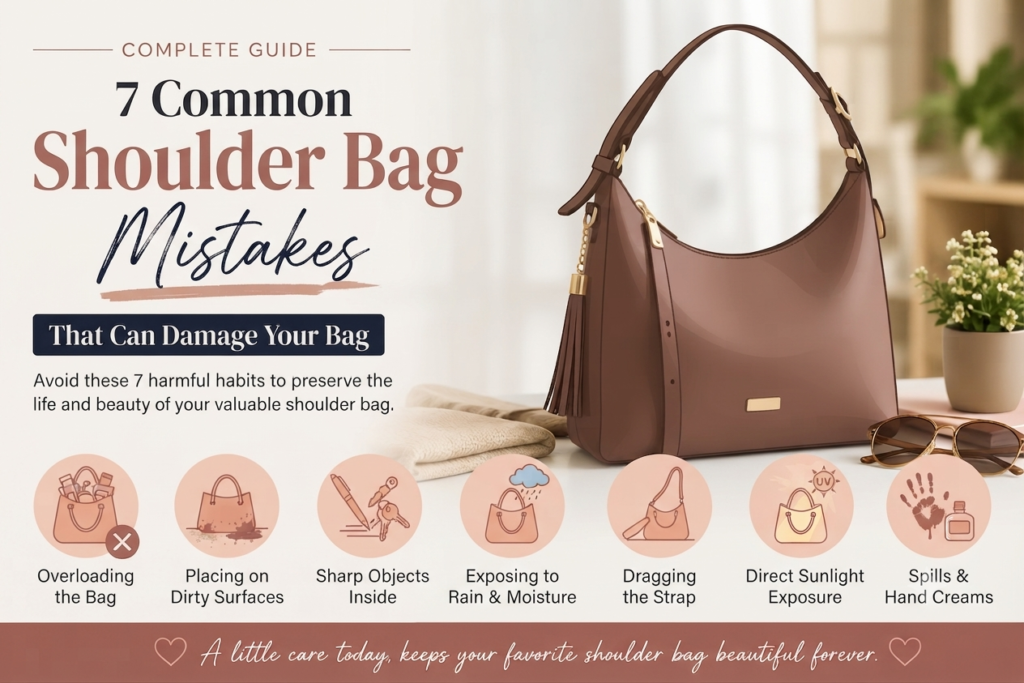
A shoulder bag is more than just a fashion accessory. It carries your everyday essentials and often becomes a trusted part of your wardrobe. However, simple everyday habits can cause scratches, stains, stretched straps, broken zippers, and loss of shape over time.
The good news is that most shoulder bag damage is preventable. By avoiding a few common mistakes, you can keep your bag looking stylish and functional for much longer.
1. Overloading Your Shoulder Bag
One of the most common mistakes is carrying too many items. A bag may look spacious, but filling every compartment can put excessive pressure on the straps, stitching, zippers, and base.
Heavy items such as large water bottles, books, electronics, and multiple cosmetics can also make the bag lose its original shape.
How to avoid it:
- Carry only essential items.
- Remove unnecessary items regularly.
- Keep heavier objects toward the center of the bag.
- Choose a larger bag when you need to carry more.
Tip: If your shoulder bag feels heavy or the strap starts pulling at its attachment points, it’s time to reduce the load.
2. Ignoring the Bag’s Material
Not every shoulder bag should be cleaned or maintained in the same way. Using the wrong cleaning product can permanently damage the surface.
For example, leather, suede, canvas, nylon, and synthetic materials each have different care requirements.
How to avoid it:
- Check the manufacturer’s care instructions.
- Use products designed for the specific material.
- Test cleaning products on a small hidden area first.
- Avoid strong household chemicals.
Understanding your bag’s material is one of the simplest ways to extend its life.
3. Placing Your Bag on Dirty or Rough Surfaces
Putting your shoulder bag on the floor may seem harmless, but rough or dirty surfaces can cause scratches, stains, dust buildup, and scuff marks.
Bathrooms, restaurant floors, public transport floors, and outdoor surfaces can be particularly risky.
Better alternatives:
- Hang the bag on a suitable hook.
- Place it on a clean chair.
- Use a clean table or designated bag area.
- Keep it away from wet surfaces.
A few seconds of careful handling can prevent long-term damage.
4. Exposing Your Shoulder Bag to Moisture
Rain, spills, humidity, and accidental splashes can affect your bag’s appearance and material. Prolonged exposure to moisture can also contribute to unpleasant odors or material deterioration.
If your shoulder bag becomes wet, don’t immediately use a hair dryer or place it directly under strong heat.
Instead:
- Empty the bag.
- Gently wipe away excess moisture.
- Allow it to air-dry naturally.
- Keep it in a well-ventilated area.
- Follow the material-specific care instructions.
Remember: Prevention is better than trying to repair water damage later.
5. Pulling or Forcing the Zippers
A stuck zipper is often a sign that something is caught in the mechanism. Pulling harder may seem like the quickest solution, but excessive force can damage the zipper or surrounding fabric.
How to protect your zippers:
- Check for trapped fabric or objects.
- Don’t overfill the compartment.
- Open and close the zipper gently.
- Avoid forcing a damaged zipper.
If a zipper repeatedly gets stuck, consider having it repaired before the problem becomes worse.
6. Storing the Bag Incorrectly
Even a high-quality shoulder bag can lose its shape when stored incorrectly. Folding, crushing, or placing heavy objects on top of the bag can create permanent creases and deformation.
For better storage:
- Empty all compartments.
- Clean the bag before storing it.
- Make sure it is completely dry.
- Store it away from direct sunlight.
- Keep it in a cool, dry place.
- Use soft tissue or suitable stuffing to help maintain its shape when appropriate.
For bags that come with a dust bag, use it during long-term storage.
7. Carrying the Same Bag Every Day
Using your favorite shoulder bag every day can naturally increase wear and tear. Constant friction, repeated strap movement, daily exposure to dust, and frequent opening and closing can gradually affect the material.
Instead of relying on one bag for every occasion, consider rotating between two or more bags.
For example:
| Occasion | Suitable Shoulder Bag |
|---|---|
| Office | Structured shoulder bag |
| College | Spacious everyday bag |
| Shopping | Lightweight shoulder bag |
| Travel | Durable, functional bag |
| Evening | Compact shoulder bag |
Rotating your bags gives each one a break and can help reduce everyday wear.
Bonus: Don’t Ignore Small Signs of Damage
Small problems can quickly become expensive repairs if ignored.
Keep an eye out for:
- Loose stitching
- Fraying straps
- Broken zipper teeth
- Loose buckles
- Peeling material
- Discoloration
- Cracked surfaces
- Damaged lining
Addressing these issues early can prevent further damage and help you keep your shoulder bag in good condition.
How to Make Your Shoulder Bag Last Longer
Good shoulder bag care doesn’t require complicated routines. A few simple habits can make a noticeable difference:
Carry less → Clean regularly → Avoid moisture → Handle gently → Store properly → Repair early → Rotate your bags
These habits protect the parts of your bag that experience the most wear, including the straps, seams, surface, hardware, and zippers.
Final Thoughts
Your shoulder bag can remain stylish and useful for years when you treat it with care. Overloading, improper cleaning, moisture exposure, rough handling, and poor storage are some of the most common causes of premature damage.
By avoiding these seven mistakes and paying attention to small signs of wear, you can protect your investment and enjoy your favorite shoulder bag for much longer.
A little care today can keep your shoulder bag looking beautiful tomorrow.