
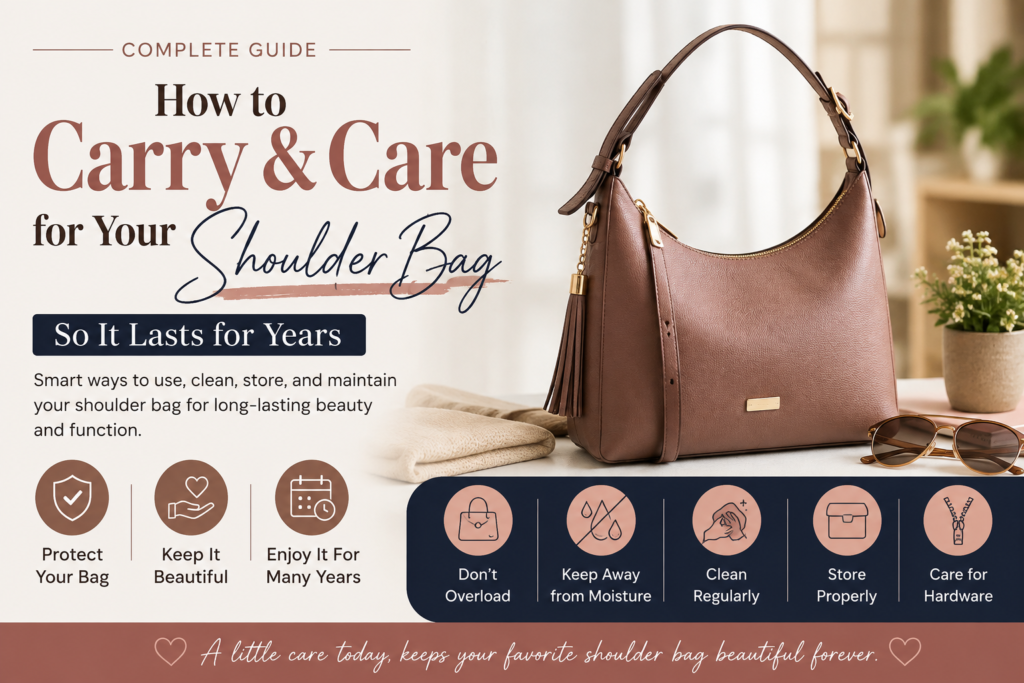
A good shoulder bag can become an everyday essential. Whether you carry it to work, college, shopping, travel, or special occasions, the way you use and care for it can significantly affect its lifespan. Overloading, improper storage, moisture, and rough handling can cause straps, fabric, zippers, and hardware to wear out faster.
With a few simple habits, you can keep your favorite shoulder bag looking stylish and functional for years. Here are practical tips for carrying, cleaning, storing, and maintaining your shoulder bag.
1. Avoid Overloading Your Shoulder Bag
One of the easiest ways to damage a shoulder bag is to fill it with too many things. Excess weight can stretch the material, weaken the straps, distort the bag’s shape, and put pressure on zippers and stitching.
Carry only what you actually need, such as:
- Phone and wallet
- Keys
- Small cosmetics
- Sunglasses
- Small notebook
- Essential personal items
Tip: If the bag feels unusually heavy or the strap starts pulling away from the body of the bag, remove unnecessary items.
2. Adjust the Strap Correctly
The shoulder strap affects both comfort and the condition of your bag. A strap that is too long can make the bag swing against surfaces, while a strap that is too short may create unnecessary tension around the attachment points.
Choose a strap length that allows the bag to sit comfortably without pulling or stretching the material.
For everyday use, an adjustable shoulder strap can be especially useful because you can change the length according to your outfit and activity.
3. Distribute the Weight Evenly
Don’t place all the heavy items on one side of the bag. Uneven weight can put additional pressure on particular areas of the stitching and affect the bag’s shape.
Keep heavier items toward the bottom or center of the bag and lighter items in smaller compartments.
This simple organization can help maintain the bag’s structure while making it more comfortable to carry.
4. Keep Your Shoulder Bag Away From Water
Moisture can damage many types of bag materials. Leather can develop stains or lose its finish, while fabric bags may absorb water and develop unpleasant odors or discoloration.
If your shoulder bag gets wet:
- Empty the bag.
- Gently wipe away excess moisture.
- Let it dry naturally in a well-ventilated area.
- Keep it away from direct heat.
- Do not use a hair dryer or place it directly under strong sunlight.
Always check the manufacturer’s care instructions before applying any cleaning or protective product.
5. Clean Your Bag Regularly
You don’t need to deep-clean your shoulder bag every week. However, regular light cleaning can prevent dirt and dust from building up.
For everyday maintenance:
- Wipe the exterior with an appropriate soft cloth.
- Remove crumbs and dust from the interior.
- Clean stains as soon as possible.
- Avoid harsh household cleaners.
- Test any cleaning product on a hidden area first.
Different materials require different care. Leather, suede, canvas, nylon, and synthetic materials should not all be cleaned in the same way.
6. Take Care of the Zippers and Hardware
Zippers, buckles, clasps, and other metal components are often the first parts to show signs of wear.
Avoid forcing a zipper when it gets stuck. Instead, check whether fabric or an object is caught in the zipper.
You should also avoid pulling aggressively on buckles and clasps. Gentle handling can help these small components remain functional for much longer.
7. Don’t Place Your Bag on Dirty or Rough Surfaces
Where you put your shoulder bag matters just as much as how you carry it.
Avoid placing it directly on:
- Wet floors
- Dirty surfaces
- Rough concrete
- Sharp edges
- Extremely hot surfaces
When you’re at a restaurant, office, or event, use a clean chair, hook, or designated bag area whenever possible.
This helps prevent scratches, stains, and unnecessary wear.
8. Store Your Shoulder Bag Properly
Proper storage is essential if you want your shoulder bag to maintain its shape for years.
Before storing it:
- Empty all pockets.
- Remove dust and dirt.
- Make sure it is completely dry.
- Store it in a cool, dry place.
- Keep it away from direct sunlight.
- Avoid stacking heavy objects on top of it.
For structured bags, gently filling the interior with clean tissue paper or soft material can help maintain its shape.
Avoid storing bags in tightly packed spaces where they can become crushed or folded.
9. Give Your Bag a Break
Using the same shoulder bag every single day can naturally increase wear and tear. If you own multiple bags, rotate them according to your outfit, occasion, or activity.
For example:
Work: Structured shoulder bag
Shopping: Lightweight everyday bag
Travel: Durable, spacious shoulder bag
Occasions: Compact and elegant shoulder bag
Rotating your bags gives each one time between uses and can help extend its overall lifespan.
10. Handle the Bag Gently
Small everyday habits can make a big difference. Don’t pull the bag by its strap unnecessarily, throw it onto furniture, or drag it across rough surfaces.
When removing your bag, place it down gently rather than dropping it.
If you treat your shoulder bag carefully from the beginning, you can reduce unnecessary stress on its seams, straps, zippers, and surface.
11. Repair Small Problems Early
Don’t wait until a small problem becomes a major repair.
If you notice:
- Loose stitching
- A damaged zipper
- A loose buckle
- A weak strap attachment
- Minor surface damage
Get it repaired as soon as practical.
Early repairs can prevent further damage and may save you from having to replace the entire bag.
12. Choose a Quality Shoulder Bag
Care starts with choosing the right bag. A well-made shoulder bag with strong stitching, durable materials, reliable hardware, and comfortable straps is generally better suited for long-term use.
When buying a shoulder bag, look at:
- Stitching quality
- Strap strength
- Material durability
- Zipper quality
- Interior construction
- Weight
- Compartment design
- Overall finish
A stylish bag is great, but durability and functionality are equally important for an everyday shoulder bag.
Quick Shoulder Bag Care Checklist
| Care Habit | Why It Matters |
|---|---|
| Avoid overloading | Reduces stress on straps and stitching |
| Adjust the strap | Improves comfort and reduces strain |
| Clean regularly | Prevents dirt and stains |
| Keep away from moisture | Protects the material |
| Store properly | Helps maintain shape |
| Handle hardware gently | Reduces zipper and clasp damage |
| Rotate your bags | Reduces everyday wear |
| Repair early | Prevents small problems from becoming bigger |
Final Thoughts
A shoulder bag doesn’t have to lose its beauty after a few seasons. Proper carrying habits, regular cleaning, careful storage, and timely repairs can help you enjoy the same bag for many years.
The key is simple: don’t overload it, protect it from moisture and rough surfaces, clean it according to its material, and store it properly when you’re not using it. With consistent care, your favorite shoulder bag can remain a stylish and practical part of your wardrobe for a long time.